
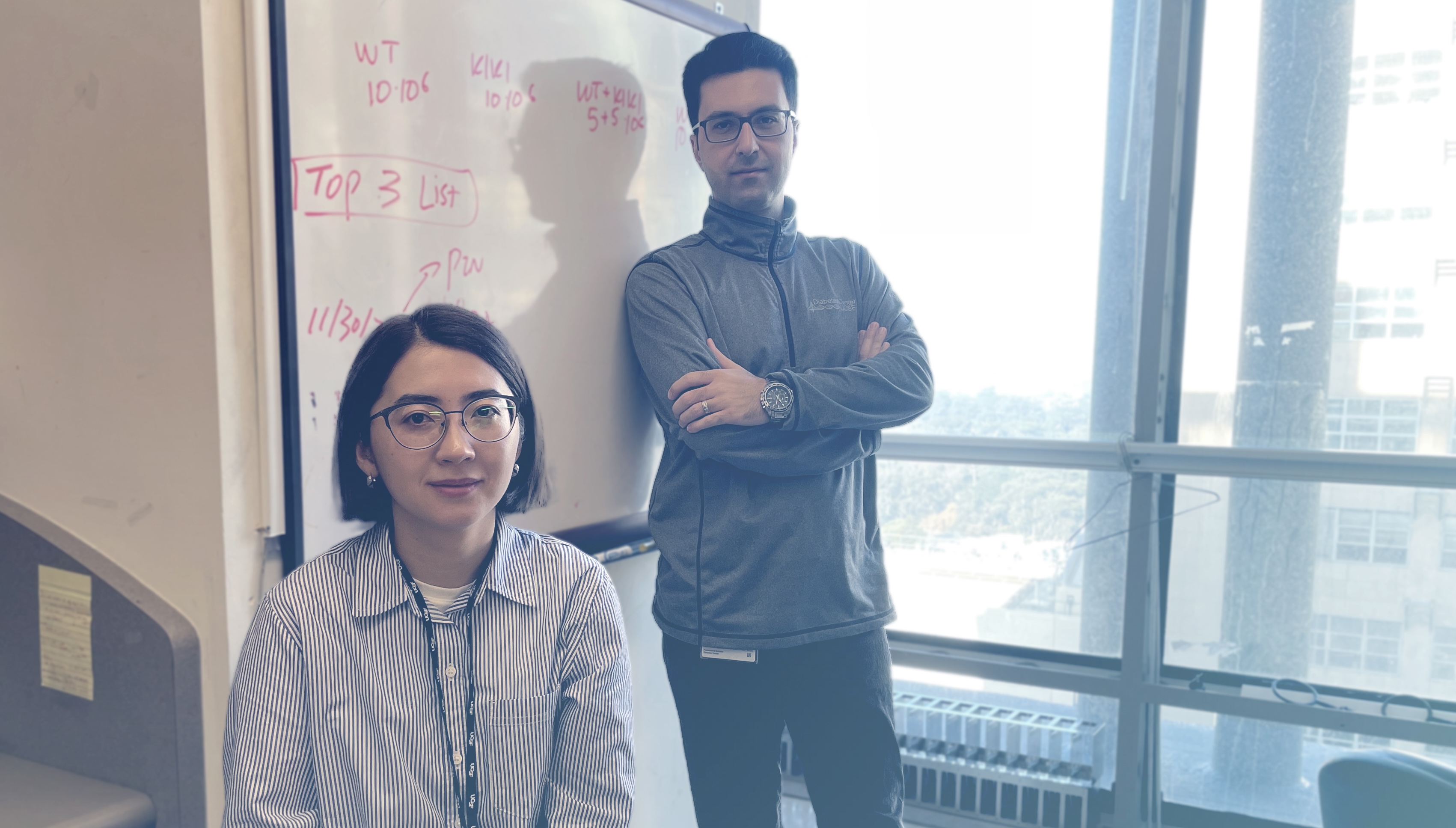
Committed to nurturing the next generation of leaders in diabetes research, The American Diabetes Association (ADA) postdoc award has for decades supported outstanding researchers in their pursuit of innovative and impactful research projects. This year, two postdocs have been named recipients. Mehdi Soleymani-Goloujeh PhD, from Parent and Tang labs, and Zhuldyz Zhanzak PhD, in Anderson Lab.
Mehdi Soleymani-Goloujeh's project, “Engineering Stem Cell–Derived Islets to Resist Inflammation-Induced Cell Death,” focuses on overcoming one of the earliest barriers to stem cell–derived islet engraftment in T1D: cytokine-driven β-cell dysfunction and death. Using TALEN/CRISPR genome engineering, cytokine pathway analysis, and synthetic biology tools, he engineers β-cells that are protected from key inflammatory stressors such as TNF-α and IFN-γ. By comparing TNFR1 deletion, expression of protective cytokine traps, and inflammation-inducible gene circuits within human stem cell–derived islets, his work aims to pinpoint which protective strategies most effectively enhance β-cell resilience.
This research aims to elucidate the fundamental mechanisms underlying inflammation-induced β-cell loss and to support the development of more durable, clinically relevant islet replacement therapies for individuals with T1D.
Zhuldzy Zhanzak's project "Defining the self-immunopeptidome and its role in CD4 T-cell tolerance in Type 1 Diabetes" focuses on using a new cutting-edge approach to unravel how T cells detect pancreatic islets. She will use a new screening platform in the Anderson lab in a close collaboration with Peter Bruno, an assistant professor in Urology with research interests in antigen presentation and T-cell biology. These studies could provide a new glimpse into the important details of how T cells start the attack on pancreatic islets and potentially new ways to halt the diabetic process.
“It's great to see ADA support these talented new investigators to the diabetes field," said Director Mark Anderson. "Both Zhuldyz and Mehdi are in an fantastic environment to bring new approaches to our understanding and treatment of type 1 diabetes. These early investments in the career of our most talented investigators is crucial to our future success.”
GLOBAL PERSPECTIVES
A native to Kazakstan, Zhanzak's academic career has taken her to Saudi Arabia and Japan, then first arriving to the United States by way of Atlanta Georgia at Emory University, before joining UCSF. "Growing up across several countries helped me become adaptable and comfortable in new environments," said Zhanzak. "That perspective has shaped how I approach challenges in science."
A native of Iran, Mehdi’s academic path has taken him from Tehran to San Francisco, shaped by training across diverse scientific and cultural environments. He completed his doctoral studies at the Royan Institute for Stem Cell Biology and Technology in Tehran, Iran, a leading public non-governmental research and clinical institution specializing in reproductive biomedicine and advanced cell technologies, before moving to the Bay Area.
The University of California, San Francisco (UCSF) is proud to welcome students from around the world, recognizing that global perspectives enrich both its academic community and the future of health sciences. International scholars bring diverse experiences, innovative ideas, and cross-cultural understanding that strengthen UCSF’s mission of advancing knowledge and improving health. By fostering an inclusive environment and offering robust support for students from abroad, UCSF continues to build a vibrant, collaborative campus where global talent can thrive and make meaningful contributions to research, patient care, and education.